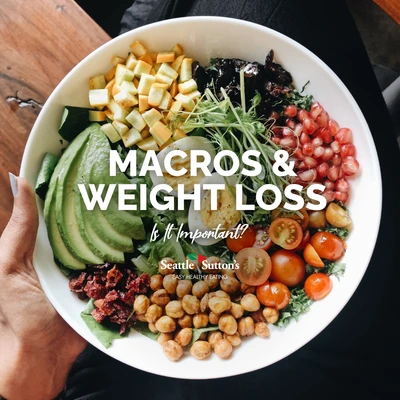
Counting macros has become one of the most popular nutrition trends in recent years, but does that mean you need to track them to lose weight successfully? The short answer: not necessarily.
Let’s break down what macros are, what the science says, and how this approach fits into a realistic, sustainable weight loss plan.
What Are Macros?
“Macros” is short for macronutrients, the nutrients your body needs in large amounts to function, grow, and stay energized. They include:
Carbohydrates
Your body’s primary energy source, especially for the brain and physical activity. Carbohydrates also provide fiber, vitamins, minerals, and antioxidants that support overall health.
Protein
Essential for building, repairing, and maintaining muscles and tissues. Protein also supports immune function and can help you feel fuller for longer.
Fat
Necessary for hormone production, nutrient absorption, and cell health. Fat also provides long-lasting energy and helps protect organs.
Each macronutrient plays an important role and your body needs all three working together, not in isolation.
What Are the Recommended Macro Guidelines?
Most evidence-based nutrition guidance comes from the Dietary Guidelines for Americans, which are updated every five years and reflect the best available research.
For general health, it is recommended the following macronutrient ranges:
- Carbohydrates: 45–65% of total calories
- Protein: 10–35% of total calories
- Fat: 20–35% of total calories
These ranges are designed to:
- Support overall nutrient intake
- Reduce risk of chronic disease
- Promote long-term, sustainable health
When people consistently eat outside these ranges, it may increase the risk of nutrient gaps or unbalanced eating patterns.
How Do You Count Macros?
Counting macros can be a time consuming and complicated task. Many people rely on apps to simplify counting macros and many apps people already use to track their food intake will calculate their daily macro percentages.
Tracking macros involves:
- Calculating your daily calorie needs
- Assigning percentages to carbohydrates, protein, and fat
- Converting those percentages into grams
- Tracking everything you eat to meet those targets
Example: 1,500-Calorie Macro Breakdown
If your daily goal is: 45% carbohydrates, 35% fat, and 20% protein
Your daily macros would equal approximately:
- 169 g carbohydrates
- 58 g fat
- 75 g protein
While this can be helpful for some individuals, it can also feel overwhelming or overly restrictive for others.
Is Tracking Macros Important for Weight Loss?
Here’s what research consistently shows: Weight loss primarily comes down to a calorie deficit, not perfect macro tracking.
If you consistently consume more calories than your body uses, weight gain can occur (regardless of macro balance) and even those who track macros can experience stalled weight loss. Likewise, a calorie deficit remains the most important driver of weight loss.
However, that doesn’t mean macros don’t matter.
Potential benefits of macro tracking:
- Encourages more balanced eating habits
- Increases awareness of food choices and portions
- Can reduce “all-or-nothing” thinking about food
- May help balance your hormones and controlling cravings
- May support athletic or performance-based goals
For some people, macro tracking is a helpful educational tool. For others, it can become stressful, time-consuming, or difficult to maintain long term.
The key takeaway: Sustainable habits matter more than perfect tracking.
Overly restrictive diets are not linked to long-term weight loss success and may make maintenance more difficult over time.
Where Does Macro Tracking Fit In Healthy Eating?
At Seattle Sutton’s Healthy Eating, our meal plans are designed using science-based guidance from:
- American Heart Association (AHA)
- American Diabetes Association (ADA)
- Dietary Guidelines for Americans
Because our meals are already carefully portioned and nutritionally balanced, they naturally fall within recommended macronutrient ranges, without the need for tracking.
Both the AHA and ADA emphasize balanced macronutrient intake to support heart health, blood sugar management, and overall wellness. This includes adequate carbohydrates for energy, lean proteins for satiety and muscle maintenance, and healthy fats for hormone and metabolic function.
Rather than requiring individuals to calculate and track these ratios themselves, our dietitian-designed meal plans are structured to already meet these evidence-based recommendations, helping remove the guesswork from healthy eating.
Macro breakdown in our plans:
- 1200-calorie plan: 47% carbs, 30% fat, 25% protein
- 1200-calorie vegetarian plan: 50% carbs, 33% fat, 19% protein
- 2000-calorie plan: 45% carbs, 31% fat, 23% protein
- 2000-calorie vegetarian plan: 48% carbs, 33% fat, 18% protein
(Based on full-week averages including recommended dairy servings.)
For most people, this means macro tracking is unnecessary, unless they have very specific goals such as athletic performance or targeted nutrition needs.
If someone does choose to track, they can use the nutrition information provided on each meal or log meals in apps like MyFitnessPal or FatSecret.
The Bottom Line: Macros vs. Real-Life Nutrition
Macro counting can be a helpful tool, but it is not required for weight loss success.
What matters most is:
- Overall calorie balance
- Food quality and nutrient density
- Consistency over time
- A sustainable approach you can maintain long term
At Seattle Sutton’s Healthy Eating, we focus on removing the guesswork so you can focus on what really matters: feeling good, eating well, and building lasting healthy habits.
Dietitian-Designed and Backed by National Guidelines
Seattle Sutton’s Healthy Eating meal plans are designed by registered dietitians to align with evidence-based nutrition standards from leading health organizations, including the American Heart Association (AHA) and the American Diabetes Association (ADA).
Both organizations emphasize balanced macronutrient distribution to support heart health, blood sugar control, and overall wellness. Rather than requiring individuals to track these ratios on their own, our meal plans are intentionally structured to naturally meet these recommended macronutrient ranges.
This ensures every meal provides balance, consistency, and nutrition you can trust—without the stress of tracking calories or macros.

Start Your Healthy Journey Today!
Order Now


 Weight Loss
 Health & Wellness
 Diabetes
 Heart Health
 Motherhood & Family
 Dietary Restriction
 Other Health Conditions
 About SSHE
Learn More And Boost Your Well Being