Weight management medications like Ozempic, Wegovy, and Zepbound are often talked about as breakthrough solutions for weight loss, and during treatment the results can be impressive.
Many people lose 15-20% of their body weight while taking these medications, along with seeing improvements in cardiometabolic health:
- HbA1c decreased by ~ 0.9 mmol/L
- Fasting glucose dropped by ~0.5 mmol/L
- Blood pressure improved (about 5.8 mm Hg systolic and 3.7 mm Hg diastolic reduction)
- Cholesterol decreased by ~0.2 mmol/L
- Triglycerides decreased by ~0.2 mmol/L
But new research is raising an important concern: what happens when the medication is stopped?
A recent systematic review and meta-analysis published in the BMJ analyzed 37 studies involving more than 9,000 adults who were overweight or obese. Researchers found that while participants lost significant weight during treatment with these medications, much of it came back surprisingly quick after stopping them.
What Happens After Stopping Weight Loss Medications?
Researchers found a consistent pattern:
- Weight regain occured at about 0.4 kg (~1.8 pounds per month)
- Most returned to their baseline weight within about 1.7 years
- For semaglutide and tirzepatide medications specifically, weight returned to baseline even faster, about 1.5 years
- Fasting glucose, systolic blood pressure, total cholesterol, and triglycerides generally returned to baseline within about 1 year after stopping treatment
- HbA1c and diastolic blood pressure returned to baseline within 1.4 years
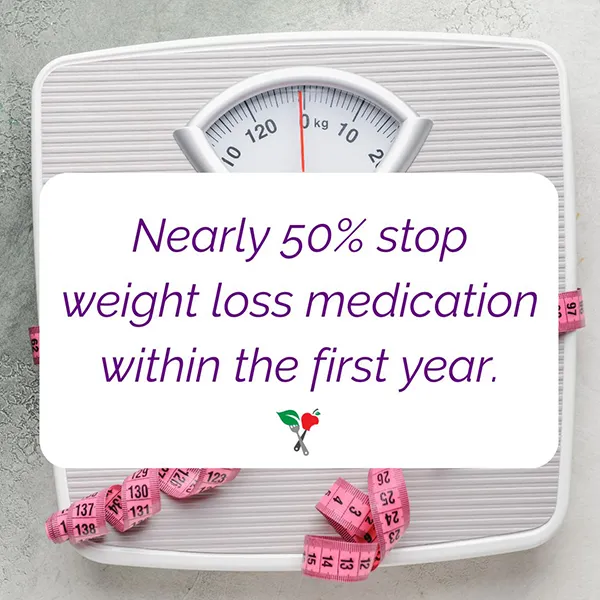
- Nearly 50% of people stop weight management medications within the first year
The 2-Year "Fork in the Road" Finding
At about 104 weeks after the end of medication use, the difference showed some real concerns:
- Those who participated in behavioral weight management programs were on average, still below their starting weight
- Those who had used weight management medications and stopped were, on average, above their starting weight
And among medication groups, the highest weight regain was seen in participants who had used newer incretin-based medications, including GLP-1 receptor agonists (Ozempic & Wegovy) and dual GIP/GLP-1 receptor agonist (Zepbound & Mounjaro).
A Cautionary Pattern: Fast Results, Fast Reversal
These medications can be power tools. But the research highlights a concern when they are used without supporting lifestyle change and what happens when the medication is stopped.
In other words, medication can "move the numbers" but it does not automatically change the daily behaviors that created the problem in the first place or create a lasting positive impact.
Without supportive habits, many people experience:
- Gradual weight regain
- Return of high blood sugar
- Rising blood pressure
- Cholesterol and triglycerides drifting back upward
Healthy Habits are Still the Foundation
At Seattle Sutton's Healthy Eating, we believe there is no replacement for consistent, balanced nutrition when it comes to long-term health. Medications alone do not teach the everyday habits needed to reach and maintain a healthy mind and body.
Without sustainable lifestyle changes, relying only on medication can leave people frustrated and depressed as weight and health markers gradually return. That is why healthy eating, portion control, and consistency matter so much.
The Power of Sustainable Habits
Behavioral weight management programs focus on the long-term skills that support lasting support (things a medication cannot teach):
- Balanced Meals
- Learning how to build balanced meals can help improve fullness and energy levels
- Portion awareness
- Practicing portion control helps you feel satisfied without overeating
- Consistent eating habits
- Regular meal routines may help prevent extreme hunger and impulsive eating
- Physical activity
- Finding realistic ways to stay active, like daily walks or strength training, can support long-term health beyond weight alone
- Healthy coping strategies
- Developing healthier ways to deal with stress and emotions can help create more sustainable habits
- Realistic lifestyle changes people can maintain
Why This Matters Long-Term
The most important takeaway from this research is not that medications "don’t work." They do, often very well when being used. The caution is this: without lasting behavior change, much of the benefit may fade after stopping treatment.
Interestingly, the BMJ review found that people who lost weight through traditional weight loss programs without medications regained weight more slowly than those who went on weight loss medications and stopped them. They also found that these people sustained the cardiometabolic benefits of losing weight for up to 5 years.
This suggests that learning sustainable habits better supports long term weight maintenance. While this approach may produce slower results, they often create a stronger foundation for lifelong health.
Nutrition Still Matters: Before, During, and After Medication
Whether someone chooses to use weight loss medicines or not, nutrition remains one of the most important tools for long-term health.
A balanced eating pattern can help:
- Support heart health
- Improve blood sugar balance
- Protein muscle mass during weight loss
- Support healthy cholesterol and blood pressure levels
- Improve energy and digestion
- Build routines that last beyond short-term interventions
For individuals using GLP-1 medications, healthy eating habits become especially important because appetite suppression can sometimes make it difficult to consume enough protein, fiber, and other key nutrients.
And for those who eventually stop medication, having healthy routines already in place (like meal planning, balanced portions, regular movements, and mindful eating habits) may help make the transition smoother and support longer term weight management.
Weight Loss is Not the Same as Long-Term Health
The number on the scale is only one part of health. True health is about supporting your heart, blood sugar, energy levels, muscle mass, mobility, and overall quality of life. None of this comes losing weight as quickly as possible.
The evidence shows a clear pattern: short-term success is possible with either approach, but long-term maintenance is far more likely when healthy habits are built and sustained.
That is why nutrition still matters. Balanced meals rich in protein, vegetables, fruits, whole grains, and healthy fats help nourish the body in ways medication cannot. Healthy habits are what help sustain health long-term.
At Seattle Sutton's Healthy Eating, we believe the goal is not just temporary results, it is creating a balanced lifestyle that people can realistically maintain for years to come.

Start Your Healthy Journey Today!
Order Now

 Weight Loss
 Health & Wellness
 Diabetes
 Heart Health
 Motherhood & Family
 Dietary Restriction
 Other Health Conditions
 About SSHE
Learn More And Boost Your Well Being