
Thanksgiving is a time for gathering with family and friends, sharing favorite recipes, and enjoying a delicious holiday meal. But between the appetizers, casseroles, desserts, and second helpings, it can be easy to feel overly full or a little sluggish by the end of the day.
But a healthy Thanksgiving doesn't have to mean putting your healthy eating habits on hold, and it certainly doesn't mean skipping your favorite holiday foods!
With a little planning and a few mindful choices, you can enjoy a satisfying Thanksgiving meal while supporting your nutrition goals. The registered dietitians at Seattle Sutton's Healthy Eating are sharing simple, realistic Thanksgiving nutrition tips to help you find balance, enjoy your favorite foods, and feel your best throughout the holiday.
10 Healthy Thanksgiving Tips for a Balanced Holiday Meal
1. Don't Skip Breakfast
It may be tempting to skip breakfast to save calories for Thanksgiving dinner, but starting your day with a balanced meal is a better approach.
Skipping meals can leave you feeling overly hungry by the time dinner rolls around, making it harder to recognize when your comfortably full. Instead, enjoy a healthy breakfast that includes protein and fiber to help support energy and keep you satisfied throughout the morning.
Try oatmeal with nuts, Greek yogurt with berries, or whole-grain toast with peanut butter. There's no need to save all your eating for one meal!
3. Build a Balanced Thanksgiving Plate
One of the easiest ways to enjoy a healthier Thanksgiving dinner is to use the MyPlate approach. As you fill your plate, aim for:
- 1/2 your plate: Non-starchy vegetables, such as green beans, Brussels sprouts, carrots or a side salad
- 1/4 your plate: Lean protein, such as roasted turkey breast
- 1/4 your plate: Starchy vegetables and grains, such as sweet potatoes, mashed potatoes, or stuffing
This approach helps provide a variety of nutrients while allowing room for the traditional dishes you look forward to each year.
Remember, this is a general guidelines, not a strict rule. Your portions and nutritional needs may vary, and there's room for all your Thanksgiving favorites.
3. Stay Hydrated Throughout the Day
Between holiday cooking, traveling, and visiting with family, it's easy to forget to drink enough water.
Keep water nearby all day long. Staying hydrated supports many important functions in the body, including digestion, circulation, and temperature regulation.
Water is a great beverage choice alongside your holiday meal. If you want something more festive, try sparkling water with fresh cranberries, orange slices, or a sprig of rosemary.

4. Enjoy Your Favorite Foods Mindfully
Thanksgiving only comes once a year, so there's no reason to feel guilty about enjoying the foods you love!
Instead of avoiding certain dishes or feeling like you need to try everything, choose the foods you look forward to most. Enjoy slowly, savor each bite, and give yourself time to recognize when you're comfortably satisfied.
The goal isn't perfection; it's finding a balance that allows you to enjoy the holiday without feeling overly full with mindful eating during the holidays.
5. Choose Lean Protein, Such as Turkey Breast
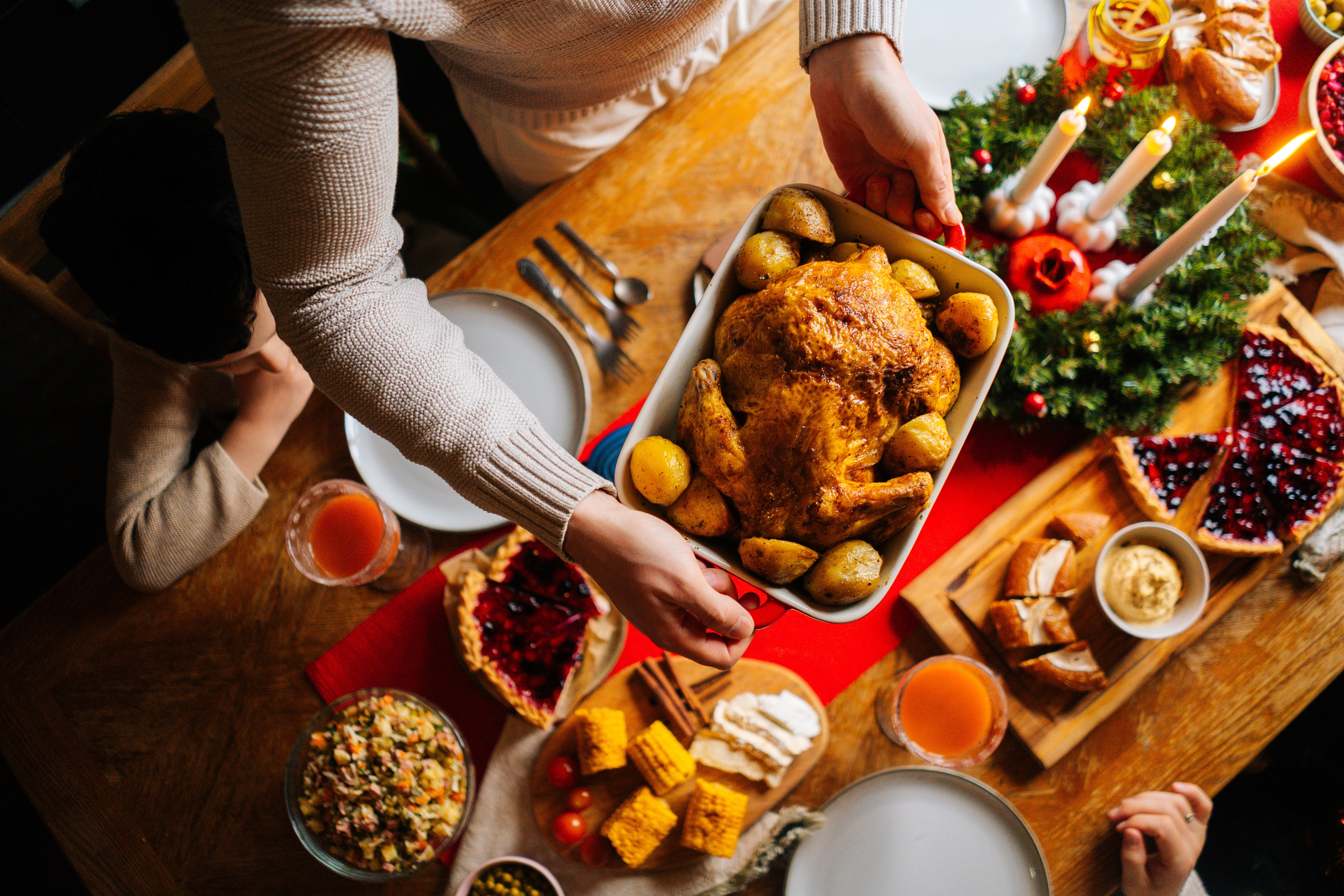
Turkey is a traditional Thanksgiving centerpiece and a great source of high-quality protein.
If you're looking for a leaner option, skinless turkey breast is generally lower in fat than dark meat, particularly when the skin is removed. Both white and dark turkey meat provide valuable nutrients, including protein, B vitamins, and minerals.
Enjoy your turkey with a moderate serving of gravy if that's one of your holiday favorites. A little gravy can add plenty of flavor without needing to skip it altogether!
6. Add More Vegetables to Your Thanksgiving Menu
Thanksgiving menus often feature plenty of starches and rich side dishes, but vegetables deserve a place at the table, too.
Vegetables provide fiber, vitamins, minerals, and antioxidants that support overall health. Adding a few colorful options can help create a more balanced meal.
Consider serving:
-
Roasted Brussels sprouts with garlic.
-
Green beans with toasted almonds.
-
Roasted carrots with fresh herbs.
-
A seasonal salad with apples, cranberries, and pecans.
-
Roasted squash with cinnamon and rosemary.
Try roasting vegetables with a small amount of olive oil and your favorite seasonings for a simple, flavorful side dish.
7. Make Cranberry Sauce with Less Added Sugar
Cranberry sauce is a Thanksgiving staple, but many commercially prepared varieties contain added sugars.
If you're making cranberry sauce at home, try using fresh or frozen cranberries, orange zest, cinnamon, and a smaller amount of added sweetener. The natural tartness of cranberries pairs beautifully with the sweetness of citrus.
Cranberries also provide fiber and beneficial plant compounds, making them a flavorful addition to your holiday menu.
You don't have to skip traditional cranberry sauce, either. Simply be mindful of portion sizes and choose the version you enjoy most.
8. Choose Your Favorite Starchy Side Dishes
Mashed potatoes, stuffing, sweet potatoes, and dinner rolls are all common Thanksgiving favorites. While these foods provide carbohydrates for energy, they can also add up when several generous portions are served together.
Rather than eliminating these foods, consider choosing the sides you enjoy most and balancing them with vegetables and lean protein.
Looking for ways to add more nutrition to traditional recipes? Try:
-
Roasting potatoes with olive oil, garlic, and rosemary.
-
Making mashed sweet potatoes with cinnamon and a little olive oil.
-
Using whole-grain bread in homemade stuffing.
-
Adding chopped vegetables, such as celery, onions, and mushrooms, to stuffing.
-
Preparing green bean casserole with a lighter sauce and adding fresh green beans.
Small adjustments can add flavor, fiber, and nutrients without taking away from the holiday meal.
9. Enjoy Dessert Without the Guilt
Pumpkin pie, pecan pie, apple pie, and other holiday desserts are part of what makes Thanksgiving special.
If you're comparing traditional options, pumpkin pie is often lower in calories than pecan pie, although recipes and serving sizes make a difference. Pumpkin also provides nutrients such as vitamin A.
However, you don't need to choose dessert based on calories alone. If pecan pie is your favorite, enjoy a slice! You can also try smaller portions, share a dessert, or sample a few bites of different favorites.
A balanced eating pattern is about what you do consistently, not one dessert or one holiday meal.
10. Get Moving After Thanksgiving Dinner
After enjoying a big holiday meal, a little movement can be a great way to spend time with family and friends.
Consider taking a leisurely walk around the neighborhood, playing with the kids, or enjoying some time outdoors.
Even a short walk after eating can help support blood sugar management, particularly after a carbohydrate-containing meal.
You don't need an intense workout to benefit from movement. Keep it enjoyable and make it part of your holiday traditions!
What Thanksgiving Foods Should You Be Mindful Of?
Rather than labeling foods as good or bad, it can be helpful to recognize which dishes may be higher in added sugar, saturated fat, sodium, or calories.
Some common Thanksgiving foods to be mindful of include:
-
Casseroles: Green bean casserole, sweet potato casserole, and other creamy side dishes may contain added butter, cream, cheese, and sodium.
-
Stuffing: Traditional stuffing can be high in sodium and saturated fat depending on the recipe and ingredients.
-
Gravy: Gravy can add extra sodium and fat, especially when prepared with pan drippings and butter.
-
Candied sweet potatoes: Brown sugar, marshmallows, and butter can significantly increase the added sugar and calorie content.
-
Pies and desserts: Many traditional desserts contain substantial amounts of added sugar and saturated fat.
Does this mean you should avoid these foods? Not at all!
Enjoying these dishes in portions that feel comfortable for you is perfectly reasonable. If you're looking to make a few adjustments, consider lighter recipes, smaller servings, or balancing richer dishes with fresh vegetables and other nutrient-rich foods.
How to Enjoy Thanksgiving Without Overdoing It
One of the biggest misconceptions about healthy holiday eating is that you need to be restrictive to stay on track.
In reality, a healthy eating pattern is built on consistency over time. One Thanksgiving meal will not undo your progress, just as one healthy meal doesn't determine your overall health.
Here are a few additional reminders:
-
Don't arrive overly hungry. Eat regular meals throughout the day rather than skipping meals to save calories.
-
Be selective with appetizers. Choose a few favorites rather than grazing continuously before dinner.
-
Eat at a comfortable pace. Give yourself time to enjoy your food and recognize fullness.
-
Enjoy your holiday traditions. Food is about more than nutrition; it's also about culture, family, and connection.
-
Return to your normal routine. There's no need to compensate for Thanksgiving with restrictive eating or extra exercise the next day.

Start Your Healthy Journey Today!
Order Now


 Weight Loss
 Health & Wellness
 Diabetes
 Heart Health
 Motherhood & Family
 Dietary Restriction
 Other Health Conditions
 About SSHE
Learn More And Boost Your Well Being