
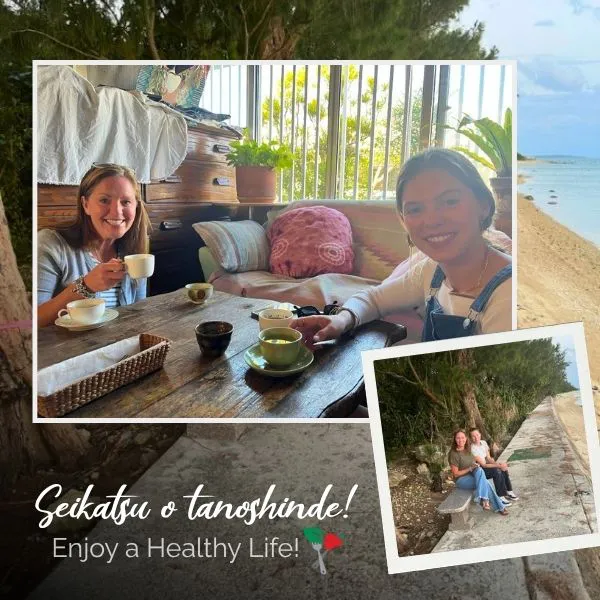
Sometimes the most meaningful lessons about nutrition don't come from a textbook, they come from sharing a meal and observing how people truly live in their environment. As a registered dietitian, I've spent years helping people navigate the overwhelming world of nutrition. I've reviewed the research, interpreted the guidelines, and helped my patients build healthier habits. But one of the most impactful nutrition lessons I've ever experienced didn't happen in my office, it happened while visiting my daughter in beautiful Okinawa, Japan.
My daughter was stationed in Okinawa while serving in the U.S. Army, and my husband and I were fortunate enough to visit her. While the trip was first and foremost about spending precious time together, it also gave me the unique opportunity to experience one of the world's most renowned Blue Zones firsthand. Just in case you've never heard of a "Blue Zone," I talk more about it down below. Keep reading!
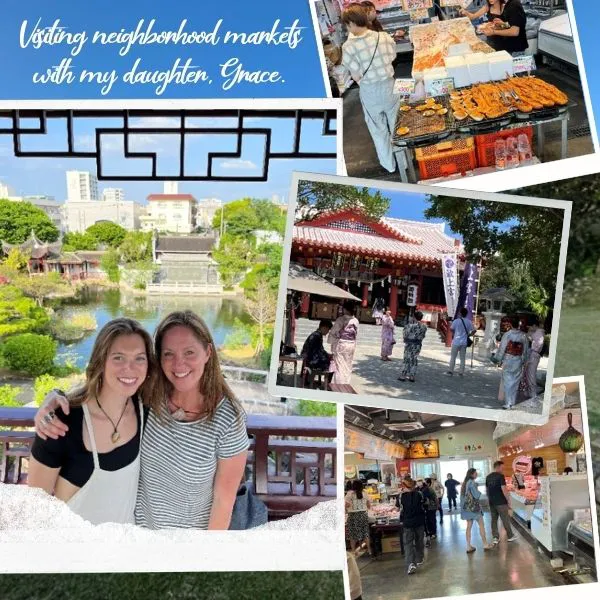
As both a mother and a dietitian, I found myself noticing everything around me. I was drawn to the neighborhood markets, where the abundance of fresh, colorful foods immediately caught my attention. But as the days passed, I realized that what truly stood out wasn't just the delicious healthy meals people were eating, it was also how they were living.
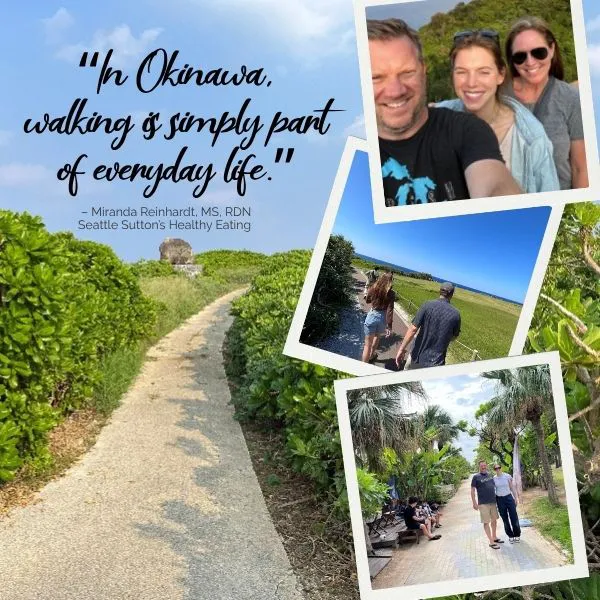
Although cars are common throughout Okinawa, walking is simply part of everyday life. People walk everywhere! They walk through neighborhoods, walk to local markets, and are truly making movement a natural part of their daily routine.
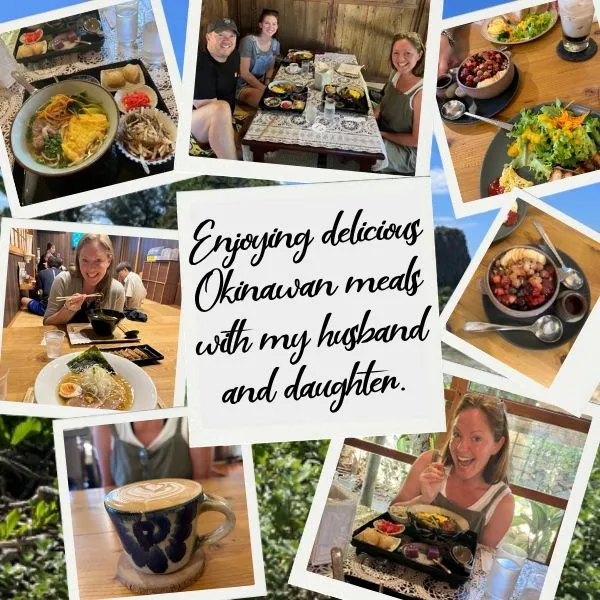
I was also fascinated by the way families gathered for meals. Sitting together on the floor around a low table, they often ate in either agura, a comfortable cross-legged position, or seiza, the traditional kneeling posture. It is believed that the up and down movement from floor sitting to standing adds to the health benefits of the Okinawan people. Meals were unhurried, with conversation and connection.
My husband and I were so inspired by this simple tradition that when we returned home, we began enjoying one or two meals each week sitting/kneeling on the floor. It has now become our own small way of slowing down, enjoying our meal, using our muscles differently by stretching into positions we were unable to do 3 years ago, and bringing a little piece of Okinawa into our home.
What is a Blue Zone?
First, I want to explain what a Blue Zone is for some of you who have never heard of this before. Blue Zones are regions of the world where people consistently live longer, healthier lives, with remarkably high numbers of individuals reaching age 100. Researchers have identified five original Blue Zones and each have their own characteristics:
- Okinawa, Japan is known for colorful vegetables, soy foods, sweet potatoes, particularly the purple sweet potato, close-knit social circles, and deep sense of purpose.
- Sardinia, Italy emphasizes family, daily physical work, whole grains, beans, vegetables, and strong multigenerational relationships.
- Nicoya Peninsula, Costa Rica focuses on beans, squash, corn, tropical fruit, physical activity, optimism, and family-centered living.
- Ikaria, Greece follows a Mediterranean style eating pattern rich in vegetables, olive oil, beans, herbs, and regular social gatherings.
- Loma Linda, California stands out because it exists within the United States, follows a largely plant-based diet, prioritizes faith, rest, community service, and healthy lifestyle practices, such as no alcohol and no smoking.
While each community has its own culture and traditions, they share several lifestyle habits that appear to support exceptional longevity and quality of life: whole foods, daily movement, strong relationships, purpose, and community.
Okinawan Food That Nourishes
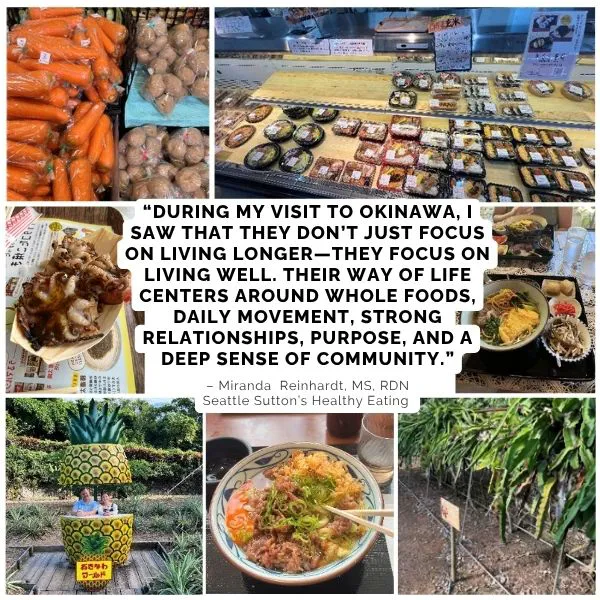
Traditional Okinawan cuisine has long emphasized foods such as:
- Purple sweet potatoes
- Giant carrots
- Tofu
- Seaweed
- Legumes
- Mushrooms
- Moderate portions of fish, pork, chicken and Wahyu beef
- Different types of black and green teas
Food is flavorful without relying on excessive sugar, sodium and oversized portions. In fact, one of the main things I immediately noticed was portion size. A large beverage in Okinawa was the size of a small beverage in the United States. As a dietitian, I appreciated that healthy eating wasn't presented as restrictive. It simply reflected generations of cultural traditions centered around nourishing the body.
Of course, I was especially excited to experience the local food as a dietitian. Sharing meals with my daughter became one of the highlights of our visit. Those meals weren't rushed. They were opportunities to reconnect, laugh, and enjoy being together.
The local markets are amazing! Fresh vegetables, seasonal produce, seafood, soy-based foods, herbs, and colorful ingredients were abundant. Meals focus on whole food rather than heavily processed convenience foods. A dietitian's dream!!!
Walking Through Okinawa
One of my favorite memories from Okinawa wasn't anything elaborate. It was simply walking. My husband, daughter and I spent time exploring neighborhoods, visiting local markets and restaurants, and enjoying the natural beauty of the island. Walking in Okinawa isn't viewed as exercise that has to be scheduled, it is simply woven into everyday life. People walk to shops, through neighborhoods, and around parks. Daily movement felt natural rather than forced.
As a dietitian, I couldn't help but notice how different this felt from life back home. In the United States, we often drive everywhere, spend much of the day sitting, and then try to "fit in" exercise. In Okinawa, movement happens almost effortlessly. It reminded me that our healthiest habits are often the ones that become part of our normal routines.
How Does This Compare with the Traditional American Lifestyle?
Our modern American lifestyle often looks very different. Many of us spend hours sitting. Our meals are frequently eaten in the car, at our desks, or while scrolling through our phones. Ultra processed foods are readily available, and stress has become almost a badge of honor. Loneliness and social isolation continue to rise despite being more digitally connected than ever.
As a dietitian, I don't believe we need to abandon our culture or relocate to another country to become healthier. I love our country! But I do think we can learn valuable lessons from places like Okinawa. We can start by making small, realistic changes:
- Fill more of our plates with vegetables, beans, fruit, and whole grains
- Cook at home more often
- Eat meals with family or friends whenever possible
- Walk after dinner
- Find opportunities for natural movement throughout the day
- Slow down enough to actually enjoy meals
- Build meaningful relationships
- Discover activities that give life purpose and joy
None of these changes require perfection. They simply require intention!
What I Discovered Wasn't a "Diet," But A Way of Life
As I reflect on my time in Okinawa, I realize that the lessons I brought home have very little to do with counting calories or following the latest trend. Instead, they are about embracing simple habits that support health over a lifetime.
As a dietitian for Seattle Sutton's Healthy Eating, I can't help but notice how closely many of these principles align with our own philosophy. We believe that lasting health comes from consistently nourishing our bodies with wholesome foods while encouraging healthy habits that fit into everyday life.
Now, I may not expect everyone to start sitting on the floor for dinner, although my husband and I still do this once or twice a week, but there are countless lessons from Okinawa that anyone can incorporate into their daily routine. The best part is that these small changes add up overtime, helping you live not only a longer life, but a healthier and more fulfilling one.
Seikatsu o tanoshinde! (Enjoy a Healthy Life!)

Start Your Healthy Journey Today!
Order Now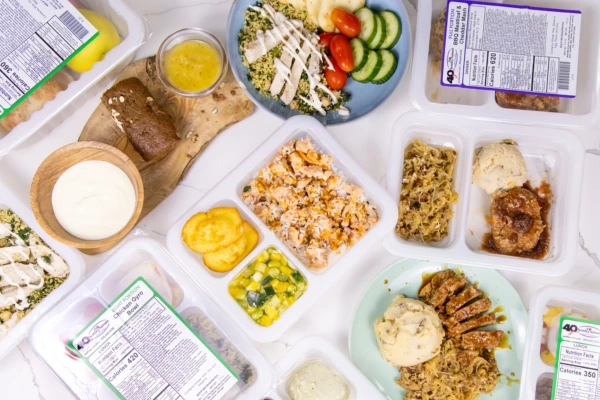


 Weight Loss
 Health & Wellness
 Diabetes
 Heart Health
 Motherhood & Family
 Dietary Restriction
 Other Health Conditions
 About SSHE
Learn More And Boost Your Well Being