
We are honored to introduce Dr. Ramona Ramdath, PhD, RD, the Meniere's Dietitian. Dr. Ramdath is a registered dietitian with a PhD in Biomedical Sciences who specializes in helping people with Ménière's disease and Vestibular Migraine's move beyond confusion and food fear by creating personalized nutrition plans that fit their symptoms, lifestyle, preferences, and medical needs. The article was reviewed by the Dietitians at Seattle Sutton's Healthy Eating.
Ménière's disease can be overwhelming. Between vertigo attacks, ear fullness, tinnitus, fluctuating hearing loss, fatigue, and the uncertainty of when symptoms may appear, many people feel like their daily lives are shaped by their inner ear. Mealtime can also become stressful because what you eat and drink can impact the fluid balance and blood flow to the inner ear. Patients are often told to "just eat low sodium," but are left wondering what that actually means in real life.
What is Ménière’s Disease?
Ménière's disease is a disorder of the inner ear that can cause episodes of vertigo, tinnitus, ear pressure or fullness, and hearing loss. Symptoms can vary from person to person and may change over time. For some, vertigo is the most disabling symptom. For others, the hardest part may be the anxiety of not knowing when the next flare may happen.
While there is no single diet that manages Ménière's disease symptoms, nutrition and lifestyle changes are commonly recommended as part of symptom management. Many healthcare providers recommend limiting sodium, staying hydrated, and paying attention to possible triggers such as caffeine, alcohol, and tobacco.
That sounds simple, but anyone who has tried to follow a low-sodium diet knows it can quickly become complicated.

What is a Ménière’s-Friendly Diet?
A Ménière's-friendly diet is not the same for everyone. It depends on many factors, including:
- Stage and severity of symptoms
- Vertigo frequency
- Hearing changes
- Other medical conditions
- Medication use, including diuretics
- Blood Pressure and heart health
- Food preferences
- Cooking ability and time
- Stress level
- Lifestyle and familly support
For many people with Ménière's disease, sodium is one of the first nutrition areas to address. The National Institute on Deafness and Other Communication Disorders notes that limiting dietary salt to about 1,500–2,000 mg per day, sometimes along with a diuretic, may help control symptoms for some people.
But low sodium does not mean no flavor, no variety, or no enjoyment. It also does not mean eating the same plain foods every day.
A good Ménière's nutrition plan should help someone feel more confident, not more restricted.
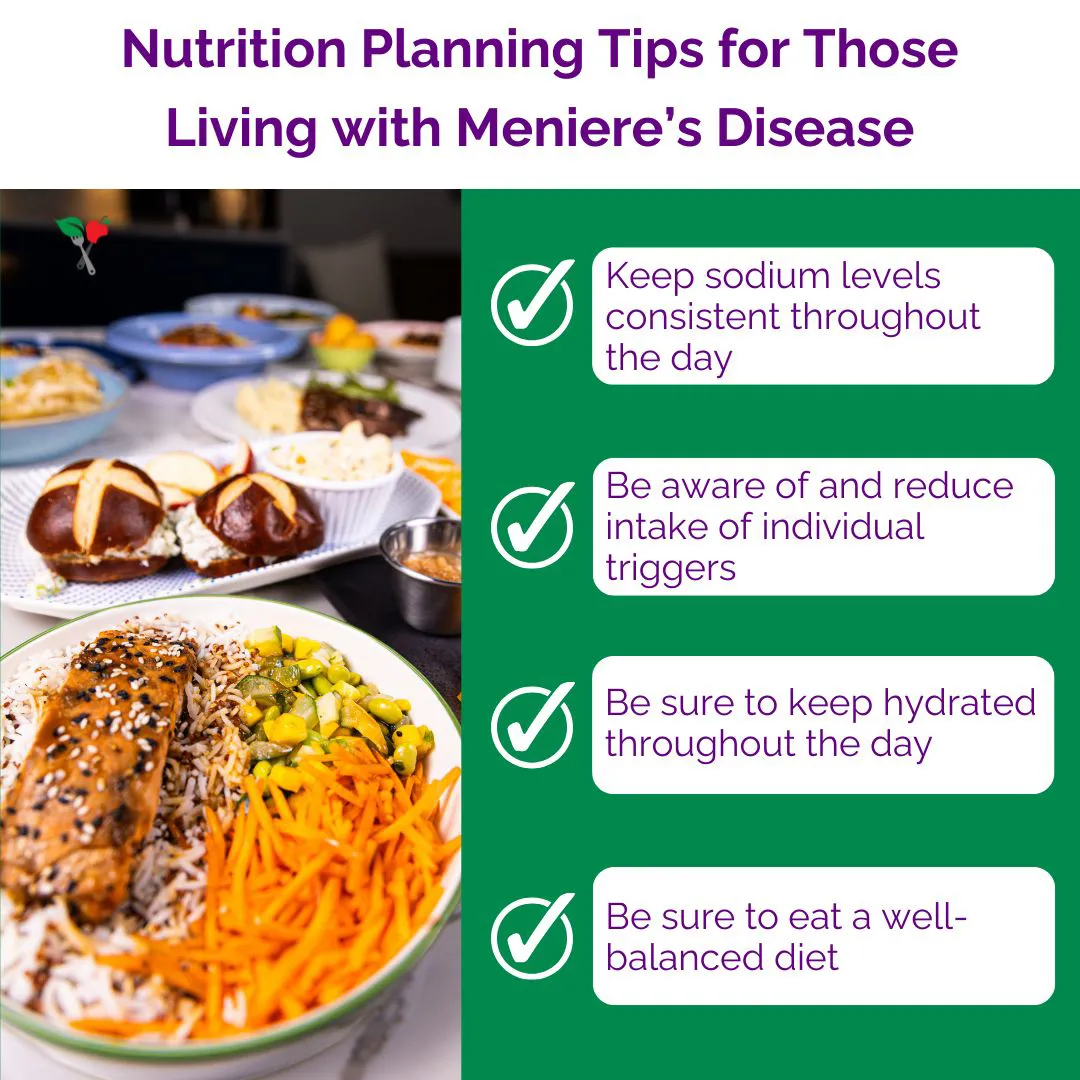
Keep Sodium Consistent
For many people with Ménière's disease, sodium consistency matters. Large swings in sodium intake may affect fluid balance in the body, and the inner ear is very sensitive to changes in fluid pressure. This is one reason many providers recommend lowering sodium, with the experts at Mayo Clinic suggesting to spread salt intake evenly throughout the day for Ménière's disease.
This can be difficult because sodium is hidden in so many foods, including:
- Restaurant meals
- Frozen meals
- Soups
- Sauces and condiments
- Bread and rolls
- Cheese
- Deli meats
- Snack foods
- Seasoning blends
- Canned foods
- Pickled foods
Many people are surprised to learn that food does not have to taste salty to be high in sodium. Reading labels is often one of the first skills people need to learn.
A helpful general rule is to look for foods with 140 mg sodium or less per serving when choosing lower-sodium options. But keep in mind this is for one individual item, not an entire meal.
Watch for Individual Triggers
Sodium is important, but it is not the only possible trigger. Some people with Ménière's disease notice symptoms worsen with caffeine, alcohol, large amounts of added sugar, dehydration, poor sleep, stress, or skipped meals. Others may have overlapping vestibular migraine, histamine sensitivity, reflux, blood sugar issues, or other conditions that affect what nutrition plan works best.
This is why a personalized approach is so important.
A food that works well for one person may not work well for another. A strict list of "good" and "bad" foods can create unnecessary fear and may not address the person's real symptom pattern.
Instead, the goal is to identify patterns over time and create a plan that is realistic enough to follow.
Do Not Forget Hydration
Hydration is another important part of supporting overall fluid balance. Some people focus so much on sodium that they forget about fluid intake. For people with Ménière's disease, hydration habits should be steady and consistent.
This does not mean everyone needs the exact same amount of water. Fluid needs depend on body size, activity level, climate, medications, and other health conditions. But for many people, drinking fluids consistently across the day is more helpful than drinking very little and then trying to catch up later.
Focus on Balanced Meals
A Ménière's-friendly eating pattern should still support whole-body health. That means meals should include a balance of:
- Fruits and vegetables
- Whole grains or other high-fiber carbohydrates
- Adequate protein
- Healthy fats
- Calcium-rich foods or alternatives
- Potassium-rich foods, when appropriate
- Magnesium-rich foods
- Flavor from herbs, spices, citrus, garlic, onion, vinegar, and salt-free seasoning blends
People with Ménière's disease are often so focused on avoiding sodium that they accidentally under-eat, eat too little protein, or rely on the same few foods every day. Over time, this can lead to fatigue, poor nutrient intake, loss of muscle mass, constipation, and more stress around food.
The goal is not just to eat less sodium. The goal is to nourish the body while managing symptoms.
How Food Delivery Can Help People with Ménière’s Disease
Eating well with Ménière's disease takes planning. For many people, the hardest part is not knowing what to eat, but having the time and energy to shop, cook, read labels, and prepare meals consistently.
Food delivery services like Seattle Sutton's Healthy Eating can be a helpful tool, especially when they offer balanced meals, clear nutrition information, and lower-sodium options.
Here are some of the top ways food delivery can support people with Ménière's disease.
Reduce the Stress of Meal Planning
Stress can make symptoms harder to manage for many people with vestibular conditions. When someone is already dealing with vertigo, ear fullness, tinnitus, hearing changes, or fatigue, planning every meal can feel exhausting.
Food delivery can remove some of that mental load.
Instead of asking, "What can I eat?" several times per day having meals planned in advance can create structure and relief. This can be especially helpful during busy work weeks, symptom flares, travel, or periods of caregiving.
Make Sodium More Predictable
One of the biggest challenges with Ménière's disease is sodium unpredictability. Restaurant meals and takeout can be extremely high in sodium, and the numbers are not always easy to find.
Food delivery services that provide nutrition information can help people make more informed choices. When sodium content is available, it becomes easier to plan the rest of the day and avoid accidental high-sodium meals.
This predictability can be very reassuring for someone who is trying to stay within a sodium goal.
Help with Portion Awareness
Portion size matters, especially with sodium. A food may look reasonable on the label, but if the actual portion eaten is two or three servings, sodium can add up quickly.
Pre-portioned meals can help people better understand what a balanced meal looks like. Over time, this can make it easier to recreate similar meals at home.
For someone newly diagnosed with Ménière's disease, this can be a helpful learning tool.
Add Variety Back into the Diet
Many people with Ménière's disease become afraid of food. They may start eating the same few "safe" meals over and over because they do not know what else to choose.
While this is understandable, it can become limiting.
Food delivery can introduce new combinations of vegetables, grains, proteins, sauces, herbs, and spices. This can help people realize that lower-sodium eating does not have to be boring or repetitive.
Variety matters for nutrition, enjoyment, and long-term success.
Nutrition Consistency During Symptom Flares
During a vertigo flare or a period of increased dizziness, cooking may not be realistic.
Even standing in the kitchen, bending down or turning quickly, can feel difficult.
Having prepared meals available can make it easier to eat consistently when symptoms are worse.
This matters because skipping meals, dehydration, or relying on high-sodium convenience foods may make someone feel worse.
Food delivery can provide a backup plan.
Easy Caregiver Support Options
Family members often want to help but do not always know what to do. Food delivery can be a practical form of support.
Instead of saying, “Let me know if you need anything,” a caregiver may be able to help by arranging meals, reviewing sodium information, or keeping easy options available during difficult weeks.
For someone living with Ménière’s disease, this kind of support can make daily life feel more manageable.

What to Look for in Food Delivery Meals
Not every food delivery option will be a good fit for Ménière's disease, but many can be helpful with the right approach.
When choosing meals, look for options that:
- Provide clear sodium information
- Offer lower-sodium meals when possible
- Include vegetables or fruit
- Include adequate protein
- Use whole grains or high-fiber carbohydrates
- Avoid very salty sauces or processed meats
- Have reasonable portion sizes
- Can be adjusted with salt-free seasonings at home
- Fit your personal preferences and medical needs
It is also helpful to look at the full day, not just one meal. For example, a meal with 600 mg sodium may fit well for one person depending on their daily sodium goal and what else they eat that day. For someone with a different target, that same meal may not fit as well.
Ménière's Nutrition is Not About Perfection
One of the most important things to remember is that Ménière's nutrition is not about perfection. It is about patterns.
A helpful eating plan should be realistic, flexible, and sustainable. It should support symptom management without making food feel like the enemy.
For most people, this means focusing on:
- Consistent sodium intake
- Balanced meals
- Adequate hydration
- Regular eating patterns
- Possible trigger identification
- Whole-body nutrition
- Stress reduction
- A plan that works in real life
Food delivery can be one useful tool within that larger plan. It may help reduce stress, improve consistency, and give people more confidence in their food choices.
Working with a Ménière's Dietitian
Because Ménière's disease is complex, many people benefit from working with a registered dietitian who understands vestibular conditions.
As a Meniere's Dietitian, I help clients through Medical Nutrition Therapy that goes beyond generic advice. My therapy balances sodium, hydration, meal timing, potassium, magnesium, micronutrients and macronutrients to help relieve vertigo and other symptoms. I also take into account other stressors such as migraines, histamine concerns, general stress, sleep, lifestyle, and the emotional burden of living with an unpredictable condition.
The goal is not to hand someone a restrictive food list. Far from it! The goal is to help sufferers understand their body, identify patterns, and build a way of eating that supports both symptom management and quality of life.
If you or someone you love is living with Ménière's disease or Vestibular Migraines, do not suffer in silence. Medical Nutrition Therapy can help.

Start Your Healthy Journey Today!
Order Now


 Weight Loss
 Health & Wellness
 Diabetes
 Heart Health
 Motherhood & Family
 Dietary Restriction
 Other Health Conditions
 About SSHE
Learn More And Boost Your Well Being