




 Weight Loss
 Health & Wellness
 Diabetes
 Heart Health
 Motherhood & Family
 Dietary Restriction
 Other Health Conditions
 About SSHE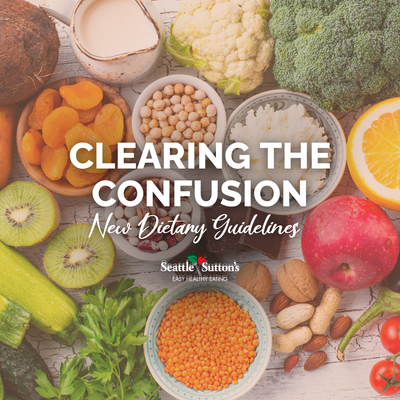



Clearing Up the Confusion Around the New Dietary Guidelines
Every time the Dietary Guidelines for Americans are updated, there is renewed interest in what, if anything, has changed. With the most recent update, much of the public conversation has been driven by new imagery and simplified visuals, which can give the impression that major shifts in nutrition science have occurred. In reality, many of the written recommendations remain largely consistent with previous guidelines and with long-standing evidence-based eating patterns. This difference has contributed to some confusion about what a healthy diet should look like.
Below, we break down some of the most common areas of confusion by comparing what the new guidelines say, what past guidelines have said, how the Mediterranean diet approaches these same topics, and how Seattle Sutton's Healthy Eating aligns with proven nutrition principles.
Fiber and Digestive Health: What the Guidelines Really Emphasize
Let's start with fiber, because this is one of the areas where visual messaging has led some people to believe that fiber is no longer a priority — even though that is not what the written guidelines actually say.
What the new guidelines say
The updated guidelines continue to emphasize eating patterns rich in fruits, vegetables, whole grains, and legumes — all of which are naturally high in fiber. While fiber may not be called out as boldly in graphics, the recommendation to build meals around plant foods remains central.
What previous guidelines said
Past guidelines have consistently encouraged higher intake of fiber-rich foods, and this remains an area where most Americans fall short. The general recommended fiber intake from the American Heart Association is 25 - 30 grams per day. Most Americans consume only 10 - 15 grams per day, far below recommendations. The science supporting fiber’s role in digestive health, blood sugar control, and heart health has not changed.
What the Mediterranean diet says
The Mediterranean eating pattern is naturally high in fiber because it centers on vegetables, fruits, beans, lentils, whole grains, nuts, and seeds. Fiber intake is a natural outcome of the overall food pattern rather than a number to track.
How Seattle Sutton's Healthy Eating compares
Our meals are built around whole, plant-forward foods, making fiber a built-in part of daily eating without requiring customers to micromanage nutrition targets.

Understanding Fat Quality: Saturated vs. Unsaturated Fats
Another major point of confusion comes from how fats are portrayed visually in the updated materials, which has led some people to believe that saturated fats are now being encouraged.
What the new guidelines say
The written guidance continues to recommend limiting saturated fat and choosing healthier unsaturated fats more often. Despite some interpretations of the new graphics, there is no reversal of this long-standing recommendation in the text of the guidelines.
Adding to the confusion, the pyramid imagery prominently features items like a large steak and a pat of butter, which suggests that these foods play a central role in a healthy diet. However, this portrayal does not reflect the written recommendations, which still advise keeping saturated fats under 10% of total calories. While these foods can fit into an overall eating pattern occasionally, their prominence on the pyramid may unintentionally imply that frequent consumption is encouraged — which is not supported by cardiovascular research.
What previous guidelines said
Earlier guidelines also advised keeping saturated fat below recommended limits and replacing it with unsaturated fats when possible, to reduce heart disease risk.
What the Mediterranean diet says
The Mediterranean diet emphasizes olive oil, nuts, seeds, fish, and other sources of unsaturated fat, while limiting red meat and butter. Fat is not avoided, but the type of fat matters.
How Seattle Sutton's Healthy Eating compares
Our meals prioritize healthier fat sources and lean proteins, avoiding heavy reliance on high-saturated fat ingredients while still providing satisfying, flavorful meals.
Sodium Intake and Heart Health
Sodium is another nutrient that tends to get overlooked in simplified food graphics, even though excess intake remains a significant public health concern.
What the new guidelines say
The recommendation to limit sodium to under 2,300 mg per day remains in place. The guidelines continue to emphasize choosing minimally processed foods and preparing meals at home to better control sodium intake.
What previous guidelines said
Earlier guidelines also targeted the same sodium limits, with even lower targets recommended for individuals with hypertension or increased cardiovascular risk.
What the Mediterranean diet says
Traditional Mediterranean eating relies on herbs, spices, garlic, citrus, and olive oil for flavor rather than heavy salt use. Naturally low-sodium whole foods are the foundation of meals.
How Seattle Sutton's Healthy Eating compares
We control sodium at the recipe level and keep meals within guideline limits, avoiding the excessive sodium levels commonly seen in restaurant and packaged foods.

Protein Needs: How Much Is Enough?
The new visuals also place a strong emphasis on protein, which can unintentionally suggest that more protein is always better — a message that is not supported by the full body of nutrition research.
What the new guidelines say
The guidelines encourage including a variety of protein sources, including seafood and plant-based options, but they do not recommend extreme high-protein intakes for most people.
What previous guidelines said
Earlier guidance also supported balanced protein intake as part of overall energy needs, without crowding out fruits, vegetables, and whole grains.
What the Mediterranean diet says
Protein is moderate and diverse, coming from fish, legumes, poultry, and occasional red meat. Plant proteins play a significant role.
How Seattle Sutton's Healthy Eating compares
Our meals include balanced portions of protein from a variety of sources, without promoting excessive protein intake at the expense of other essential nutrients.
Added Sugars vs. Natural Sugars: What Matters Most
Sugar is often discussed in extremes, with some people feeling they must eliminate all sugar and others assuming that moderation no longer matters.
What the new guidelines say
The focus remains on limiting added sugars, not naturally occurring sugars found in fruits and dairy. Keeping added sugars below 10% of total calories continues to be recommended.
What previous guidelines said
Past guidelines similarly targeted added sugars rather than total sugar, recognizing that whole foods with natural sugars also provide important nutrients.
What the Mediterranean diet says
Added sugars are limited, with sweetness primarily coming from fruit and minimally processed foods.
How Seattle Sutton's Healthy Eating compares
We keep added sugars low across meals while allowing naturally occurring sugars from whole foods that contribute to overall nutrient intake.
Are Artificial Sweeteners a Healthy Alternative?
As people try to reduce sugar, many turn to artificial sweeteners, assuming they are a healthier alternative - but that assumption deserves a closer look.
What the new guidelines say
Non-nutritive sweeteners are not considered part of a healthy dietary pattern, and their long-term role in health remains unclear.
What previous guidelines said
Earlier guidelines focused on reducing added sugar but did not promote artificial sweeteners as a preferred replacement.
What the Mediterranean diet says
Artificial sweeteners are not part of traditional Mediterranean eating patterns, which emphasize whole foods and natural flavors.
How Seattle Sutton's Healthy Eating compares
Our meals avoid artificial sweeteners, colors, and flavors, relying on real ingredients to provide taste and balance.

The Bottom Line
When you look past the graphics and headlines, the core nutrition advice remains familiar: prioritize whole, minimally processed foods, emphasize fruits, vegetables, whole grains, lean proteins, and healthy fats, and limit added sugars, sodium, and saturated fat. These principles are consistent with decades of research and closely align with the Mediterranean-style eating pattern, which continues to be associated with better long-term health outcomes.
We appreciate efforts to make nutrition guidance easier to understand, and we also believe it's important that messages remain clear and consistent. When visuals and written recommendations don't fully align, mixed messages can result. At Seattle Sutton's Healthy Eating, our focus is on making healthy eating simple and approachable by following well-established nutrition science and providing meals built around balanced, proven eating patterns.