


 Weight Loss
 Health & Wellness
 Diabetes
 Heart Health
 Motherhood & Family
 Dietary Restriction
 Other Health Conditions
 About SSHE

Cut Your Stroke Risk This Thanksgiving
Thanksgiving is almost here, a time filled with family, tradition, and indulgent comfort foods. While many of us take a break from thinking about nutrition and exercise during the holidays, new research from the American Heart Association (AHA) suggests that some classic Thanksgiving foods may increase the risk of stroke when eaten in excess—particularly those high in certain types of fat.
The good news? Small, simple swaps can significantly improve the heart health of your Thanksgiving meal—without sacrificing flavor or tradition.
New Research Links Certain Fats to Increased Stroke Risk
A large, 27-year study of more than 117,000 healthcare professionals found that the type of fat consumed matters more than the total amount when it comes to cardiovascular health.
Key findings include:
-
People who consumed the highest amounts of non-dairy animal fat had a 16% higher risk of stroke
-
Dairy fat was not associated with increased stroke risk
-
Diets higher in vegetable oils and polyunsaturated fats were linked to a lower stroke risk
Stroke is the fifth leading cause of death in the United States, making these findings especially important. A stroke occurs when blood flow to the brain is interrupted—either by a clot (ischemic stroke) or a ruptured blood vessel (hemorrhagic stroke).
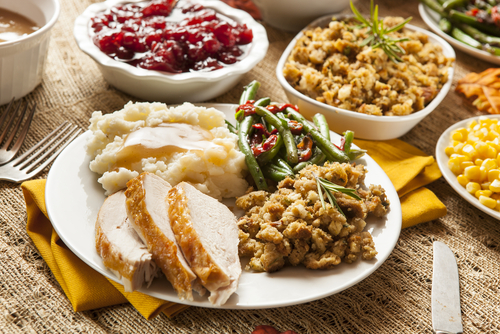
How Unhealthy Is a Traditional Thanksgiving Dinner?
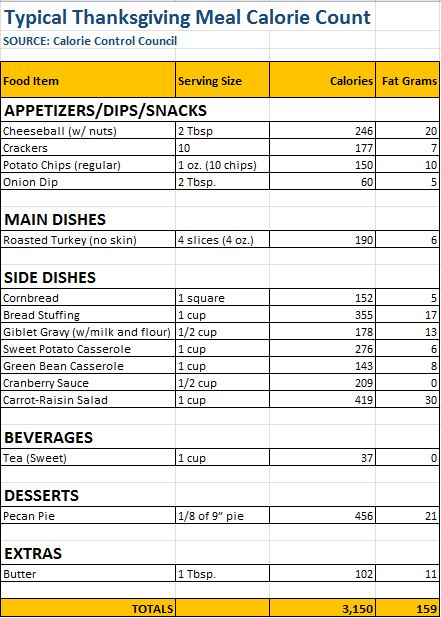
According to the Calorie Control Council, the average traditional Thanksgiving meal contains approximately:
-
2,700+ calories
-
130 grams of total fat
-
~50 grams of saturated fat
From cheeseballs and crackers to stuffing, gravy, casseroles, and pie, saturated fat quickly adds up—often exceeding daily recommended limits in a single meal.
Traditional Thanksgiving Dinner Nutrition Snapshot
Total: ~2,719 calories | 132 g fat
Most of this fat comes from red meat, processed meats, butter, cream, and gravies—all major sources of saturated fat.
Traditional Thanksgiving Dinner
| Food Item | Serving Size | Calories | Fat Grams |
| Cheeseball (w/nuts) | 2 Tbsp. | 246 | 20 |
| Crackers | 10 | 177 | 7 |
| Potato Chips | 1 oz. (10 chips) | 150 | 10 |
| Onion Dip | 2 Tbsp. | 60 | 5 |
| Roasted Turkey (meat & skin) | 4 slices (4 oz.) | 214 | 8.5 |
| Cornbread | 1 square | 152 | 5 |
| Bread Stuffing | 1 cup | 355 | 17 |
| Giblet Gravy (w/milk & flour) | ½ cup | 179 | 13 |
| Sweet Potato Casserole | 1 cup | 276 | 6 |
| Green Bean Casserole | 1 cup | 143 | 8 |
| Cranberry Sauce | ½ cup | 209 | 0 |
| Pecan Pie | 1/8 of 9” Pie | 456 | 21 |
| Butter (for bread) | 1 Tbsp. | 102 | 11 |
| TOTAL | 2719 | 132 |
Why Fat Quality Matters for Heart & Brain Health
Dietary fat is essential. It supports energy production, hormone balance, cell function, and nutrient absorption. However, too much saturated and trans fat can:
-
Raise LDL (“bad”) cholesterol
-
Increase inflammation
-
Elevate stroke and heart disease risk
Fats that are solid at room temperature—like butter, shortening, and animal fat—are typically higher in saturated fat.
In contrast, unsaturated fats found in plant-based oils support cardiovascular health.
What the Study Really Found
Researchers analyzed long-term data from participants in the Nurses’ Health Study and Health Professionals Follow-Up Study, tracking dietary fat intake through food frequency questionnaires every four years.
Key results:
-
Highest intake of non-dairy animal fat → 16% higher stroke risk
-
Highest intake of vegetable fat & polyunsaturated fat → 12% lower stroke risk
-
Each daily serving of red meat → 8% higher stroke risk
-
One or more servings of processed red meat → 12% higher stroke risk
What This Means for Your Thanksgiving Plate
The American Heart Association recommends limiting saturated fat and processed meats—especially during high-calorie holidays like Thanksgiving.
Heart-Healthy Thanksgiving Tips
-
Choose white meat turkey without the skin
-
Skip processed meats (bacon bits, sausage stuffing)
-
Replace butter and animal fat with olive, avocado, canola, or soybean oil
-
Emphasize plant-based proteins like beans, legumes, nuts, and seeds
-
Practice portion control—you can enjoy everything, just not everything at once
As the AHA states:
“Replacing processed meats with other protein sources is associated with lower death rates.”
How Seattle Sutton’s Healthy Eating Makes Thanksgiving Healthier
At Seattle Sutton’s Healthy Eating, heart health is built into every meal. Our menus:
-
Limit animal fats
-
Emphasize plant-based and dairy-based fats
-
Use house-made salad dressings with plant oils
-
Include beans, legumes, nuts, and seeds
-
Exclude red meat and pork
-
Follow American Heart Association and American Diabetes Association fat guidelines
The Impact: A Healthier Holiday Choice
By choosing Seattle Sutton’s Thanksgiving Dinner over a traditional meal, you save:
-
2,219 calories
-
120 grams of fat
-
~45 grams of saturated fat
Lower fat, lower sodium, and heart-healthy ingredients can significantly reduce stroke risk—without sacrificing the joy of the holiday.
The Bottom Line
You don’t need to skip Thanksgiving favorites to protect your heart and brain. By:
-
Choosing lean proteins
-
Swapping saturated fats for plant-based oils
-
Avoiding processed meats
-
Watching portions
…you can enjoy a delicious Thanksgiving while supporting long-term cardiovascular health.