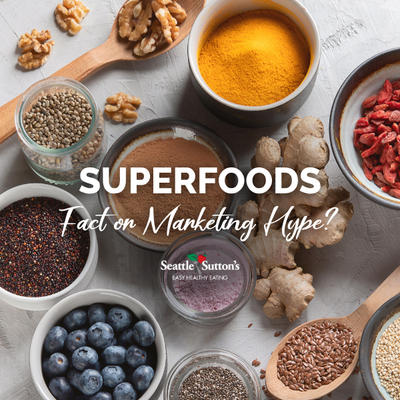
Acai, chia, and turmeric, oh my! Every year, a new food seems to earn "superfood" status, often accompanied by bold claims that it can boost your immune system, reduce inflammation, help you lose weight, or even help you live longer.
But do you really need exotic ingredients or expensive powder to eat a healthy diet? The short answer is no. While so many so-called superfoods are certainly nutritious, no single food can provide everything your body needs. Lasting health comes from eating a variety of nutrient-rich foods, not chasing the latest nutrition trend.
What Is a Superfood?
Here's something that surprises many people: There is no official scientific or legal definition of a "superfood." The term is primarily used for marketing to describe foods that are especially rich in nutrients such as:
- Fiber
- Vitamins and minerals
- Antioxidants
- Healthy fats
- Phytochemicals (beneficial plant compounds)
Many foods labeled as superfoods are excellent choices, but they're far from the only nutritious foods available.

The Real Superstars Are Probably Already in Your Kitchen
Some of the healthiest foods don't come with flashy labels. Many everyday foods provide the same nutrients as trendy superfoods, often at a fraction of the cost. Examples include:
- Blueberries
- Broccoli
- Beans and lentils
- Spinach
- Sweet potatoes
- Tomatoes
- Garlic
- Walnuts
- Oats
- Apples
These foods are affordable, easy to find, and supported by decades of nutrition research.
What Makes a Food Nutritious?
Rather than asking whether a food is a "superfood," ask:
- Does it provide fiber?
- Is it rich in vitamins or minerals?
- Does it contain healthy fats?
- Does it help me eat more fruits, vegetables, whole grains, or legumes?
The healthiest foods tend to check several of these boxes.
Can One Food Improve Your Health?
No single food can make up for an overall unhealthy eating pattern. Adding chia seeds to a sugary milkshake or sprinkling turmeric on a fast-food meal won't undo the effects of a diet that's high in added sugars, saturated fat, and highly processed foods.
Research consistently shows that it's your overall eating pattern that has the greatest impact on long-term health, not one ingredient. That's why eating a variety of nutrient-rich foods is much more important than focusing on one "miracle" food.

Do You Need Superfood Supplements?
Many products promise the benefits of superfoods in powders, drinks, or capsules. While some supplements may have a place for people with specific nutrient deficiencies, they generally don't provide the same combination of fiber, vitamins, minerals, and beneficial plant compounds found in whole foods.
Whenever possible, choose foods first. Whole foods offer nutrients that work together in ways supplements simply can't.
A Balanced Plate Beats a Single Superfood Every Time
Instead of searching for one perfect food, focus on building balanced meals that include:
- Plenty of vegetables
- Fruits of different colors
- Whole grains
- Lean proteins or plant proteins
- Healthy fats
This approach provides your body with the wide variety of nutrients it needs to support heart health, digestion, immunity, energy, and overall wellness.
Healthy Eating Doesn't Have to Be Trendy
Nutrition trends will continue to come and go, but the foundation of healthy eating has remained remarkably consistent. Eating more fruits and vegetables, choosing whole grains, including lean proteins, and enjoying healthy fats continues to be one of the best ways to nourish your body. Because the healthiest diet isn't built around one superfood—it's built around healthy habits that last.

Start Your Healthy Journey Today!
Order Now


 Weight Loss
 Health & Wellness
 Diabetes
 Heart Health
 Motherhood & Family
 Dietary Restriction
 Other Health Conditions
 About SSHE
Learn More And Boost Your Well Being