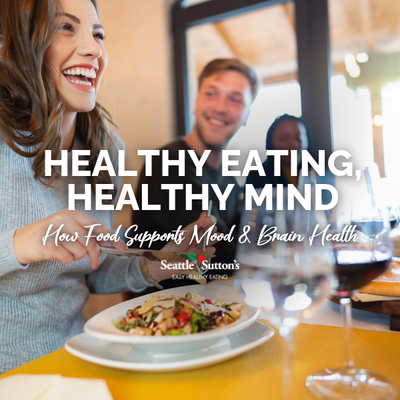
We often refer to food as “fuel” for our bodies. It makes sense that if you want your body to run at its best, you need quality fuel. But food does more than provide energy for your muscles. What you eat also provides the nutrients your brain needs to function, and your overall eating pattern can play a role in mood, energy, concentration and mental well-being.
So, can healthy eating improve your mental health? It can certainly be part of the equation.
Research continues to explore the connection between nutrition and the brain, including the gut-brain connection. Eating patterns rich in vegetables, fruits, whole grains, beans, nuts, fish and other nutrient-rich foods have been associated with better overall mental well-being, while research on Mediterranean-style eating patterns has found potential benefits for depressive symptoms.
Of course, food is not a cure for depression or anxiety, and mental health is influenced by many factors. But giving your brain the nutrients it needs is one way to take care of yourself. Here are some of the psychological benefits of healthy eating that I think are worth paying attention to.
Supports a Healthy Mood
Have you ever noticed that you don't feel your best when you're hungry? There is a reason the word “hangry” has become part of our vocabulary!
Going too long without eating can leave you feeling tired, irritable and unable to concentrate. Eating regular, balanced meals can help provide a steady supply of energy throughout the day.
There is growing interest in the relationship between dietary patterns and depression. In particular, studies of Mediterranean-style diets suggest that improving overall diet quality may help reduce depressive symptoms in some people, although more research is needed to understand exactly how much of an effect diet can have.
That is an important distinction: healthy eating can support mental well-being, but it should not replace professional treatment when it comes to mental health.

Supports Brain Health and Concentration
Your brain is working all day long, whether you realize it or not. It needs energy and a steady supply of nutrients to support everything from memory and attention to problem-solving and concentration.
Carbohydrates are particularly important because glucose is a primary energy source for the brain. That doesn't mean all carbohydrates are created equal, though. Whole grains, oats, beans, fruits and vegetables provide carbohydrates along with fiber and other important nutrients.
Rather than focusing on one “brain food,” I recommend looking at the overall meal. A balanced meal that combines protein, high-fiber carbohydrates, vegetables or fruit and healthy fats can help you build a more nutritious foundation for the day.
What about breakfast?
Breakfast isn't necessarily the “most important meal of the day,” as we were once told. But for people who enjoy breakfast and feel better eating in the morning, it can be a great opportunity to start the day with nutritious foods.
Research in children and adolescents suggests that eating breakfast can provide short-term benefits for certain areas of cognitive function, including attention and memory, compared with fasting. The evidence on the ideal breakfast composition is less clear. Try oatmeal topped with berries and nuts, Greek yogurt with fruit and whole-grain cereal, or eggs with whole-grain toast and fruit.
Supports the Gut-Brain Connection
You may have heard about the gut-brain axis, which describes the communication between your digestive system and your brain. Researchers are learning more about how the trillions of microorganisms living in our digestive tract interact with our bodies and may influence processes related to immunity, inflammation, metabolism and brain function.
This doesn't mean that eating a certain food will immediately change your mood. The gut-brain connection is complex, and researchers are still learning exactly how diet, the gut microbiome and mental health interact.
That's why we need to feed our guts well. Fiber-rich foods such as fruits, vegetables, whole grains, beans, lentils, nuts and seeds help support a healthy digestive environment. Fermented foods such as yogurt and kefir can also be part of a healthy eating pattern.

Helps You Get the Nutrients Your Brain Needs
Your brain needs a wide variety of nutrients to function properly. A balanced eating pattern helps provide important nutrients including B vitamins, iron, magnesium, omega-3 fatty acids and more. This is another reason I don't recommend focusing on a single food or nutrient.
For example, vitamin B12 deficiency can cause neurological symptoms and has been associated with depression, but that doesn't mean taking extra B12 will improve mood in someone who isn't deficient. The goal is to meet your nutritional needs through a varied diet whenever possible.
Can Healthy Eating Improve How You Feel About Yourself?
There is something empowering about taking care of yourself. Healthy eating isn't about following a perfect diet, eliminating your favorite foods or trying to achieve a certain body size. It is about giving your body what it needs and developing habits that help you feel your best.
When you consistently choose nourishing foods, you may notice benefits that have nothing to do with the number on the scale: such as having more energy, feeling more satisfied after meals, improved body image or feeling confident that you are taking care of yourself.
And please don't underestimate the psychological benefit of giving yourself permission to enjoy food, too. A healthy eating pattern has room for birthday cake, pizza with the family and your favorite dessert. One meal or one food doesn't determine your health. What matters most is what you do consistently over time.
What Foods Are Good for Your Mood and Brain?
Instead of searching for one magical “mood-boosting” food, build meals around a variety of nutrient-rich foods.
Some great choices include:
Salmon and Other Fatty Fish
Salmon, sardines, trout and tuna provide omega-3 fatty acids, including DHA and EPA. These healthy fats are important components of brain cell membranes and are part of an overall heart- and brain-healthy eating pattern.
Berries
Blueberries, strawberries, raspberries and blackberries are rich in fiber and plant compounds called polyphenols.
Leafy Green Vegetables
Spinach, kale, collard greens, Swiss chard and other dark leafy greens provide folate, magnesium, vitamin K and other nutrients.
Eggs
Eggs are an excellent source of protein and provide several nutrients important for overall health, including choline. Choline plays a role in brain and nervous system function.

Beans and Lentils
Black beans, chickpeas, kidney beans, white beans and lentils provide a combination of plant-based protein, fiber, folate and other nutrients.
Oatmeal and Other Whole Grains
Oatmeal, brown rice, quinoa, barley and whole-grain breads and pastas provide carbohydrates for energy along with fiber and other nutrients.
Walnuts
Walnuts provide healthy fats, including plant-based omega-3 fatty acids, as well as protein and fiber. Keep a small portion on hand for an easy snack, or sprinkle them over oatmeal, yogurt or a salad.
Greek Yogurt
Greek yogurt provides protein, calcium and other nutrients. Yogurt with live cultures can also be a source of beneficial bacteria. Choose plain or lightly sweetened yogurt and add your own fruit, nuts or seeds for a balanced snack or breakfast.
Dark Chocolate
Yes, chocolate can have a place in a healthy eating pattern! Dark chocolate contains cocoa compounds called flavanols. Choose a small portion of dark chocolate when you're craving something sweet and enjoy it as part of an overall balanced diet.
Healthy Eating Is About More Than Your Physical Health
When we talk about healthy eating, the conversation often focuses on weight, cholesterol, blood pressure or blood sugar. Those things are important, but they aren't the whole story.
Eating a balanced, nutrient-rich diet can help support steady energy, concentration, gut health and overall mental well-being. And when healthy eating becomes a regular part of your lifestyle, you're not just feeding your body. You're giving your brain the nutrients it needs to do its job, too.
Because healthy eating isn't just about looking better. It's about eating better and feeling great.

Start Your Healthy Journey Today!
Order Now


 Weight Loss
 Health & Wellness
 Diabetes
 Heart Health
 Motherhood & Family
 Dietary Restriction
 Other Health Conditions
 About SSHE
Learn More And Boost Your Well Being